


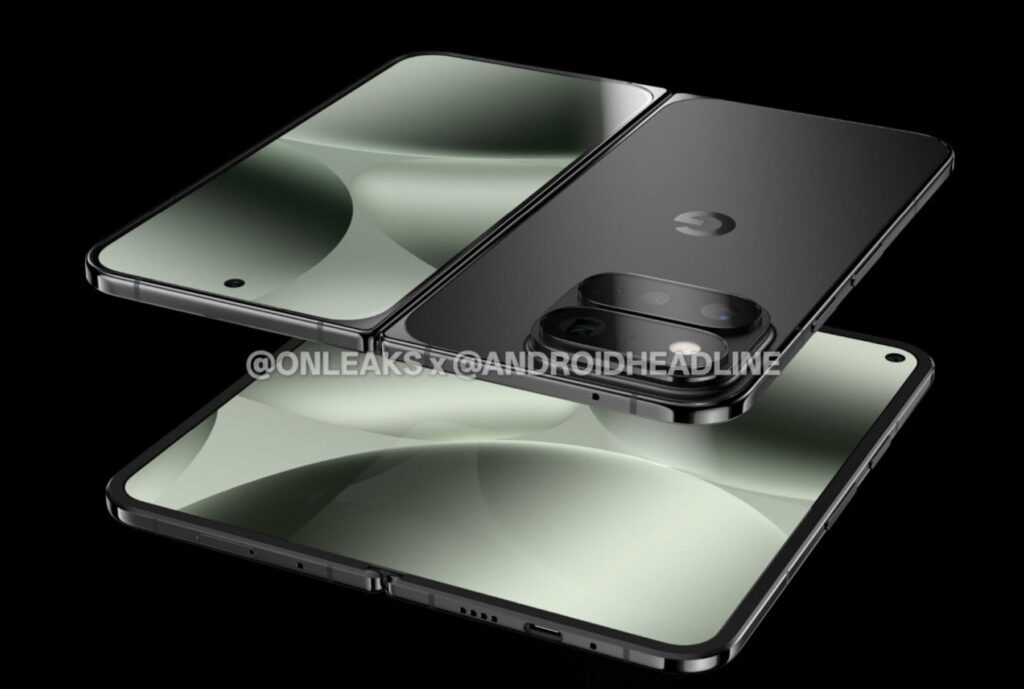
Google’s next foldable may not reinvent the form factor, but the newly leaked CAD renders of the Pixel 11 Pro Fold reveal something arguably more important in industrial design: refinement. Shared by OnLeaks in collaboration with Android Headlines, the images show a device that preserves the familiar Pixel foldable silhouette while quietly polishing its proportions and details.
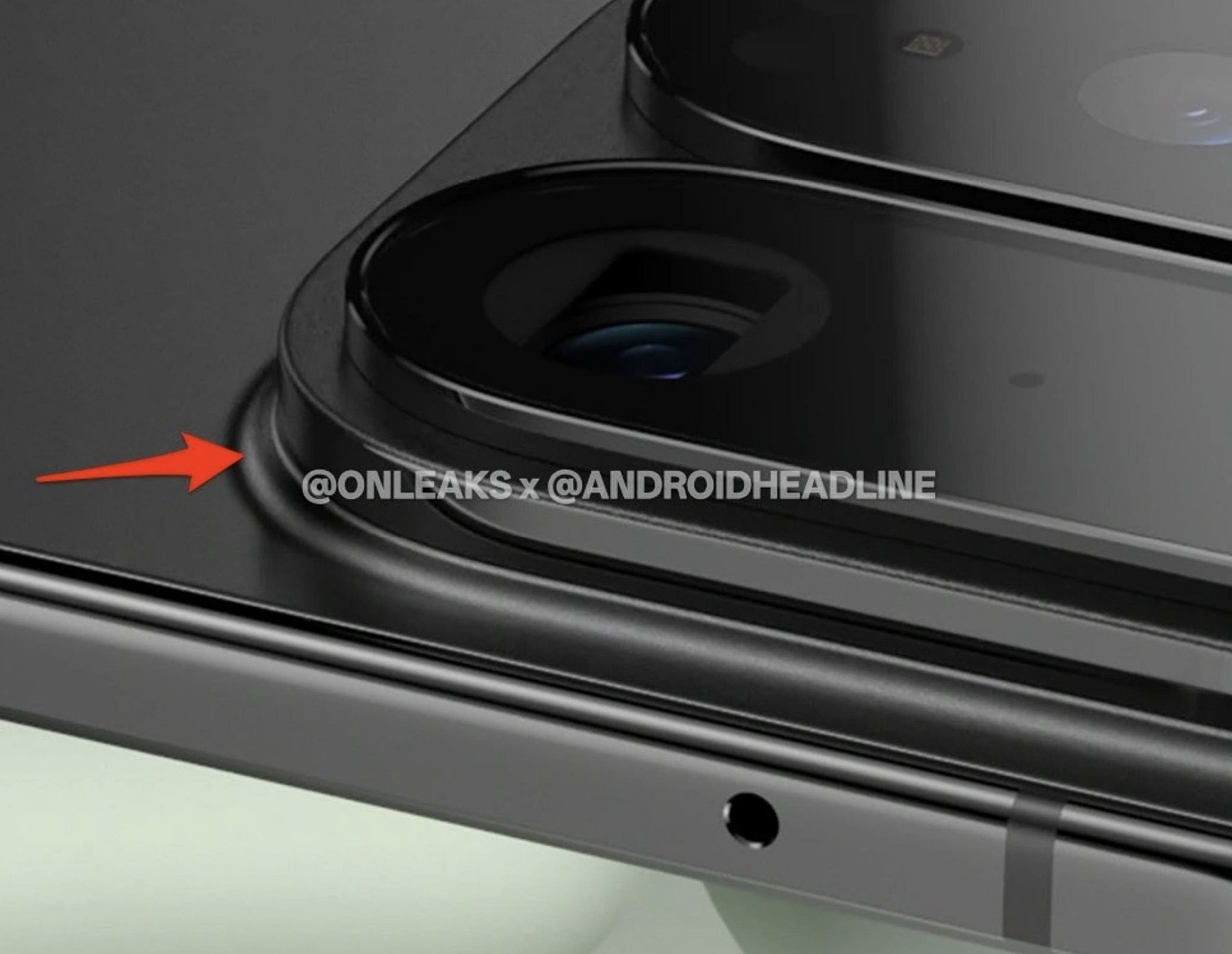
At first glance, the design looks instantly recognizable. The book-style folding layout remains intact, with rounded corners and a large internal display framed by evenly balanced bezels. The inner panel still features a punch-hole camera positioned in the top-right corner, maintaining the visual symmetry Google established with the previous generation. Raised edges around the foldable display suggest the same protective approach used on most flexible panels today, helping prevent contact when the device is closed.

Where the update becomes interesting is in the camera architecture. The rear module has been redesigned with cleaner geometry and a more integrated visual flow. The LED flash and microphone now sit within the pill-shaped camera enclosure rather than outside it, simplifying the composition of the module. The transition between the camera island and the rear panel also appears curved instead of abrupt, creating a smoother industrial line that blends the component into the chassis rather than treating it as a separate element.
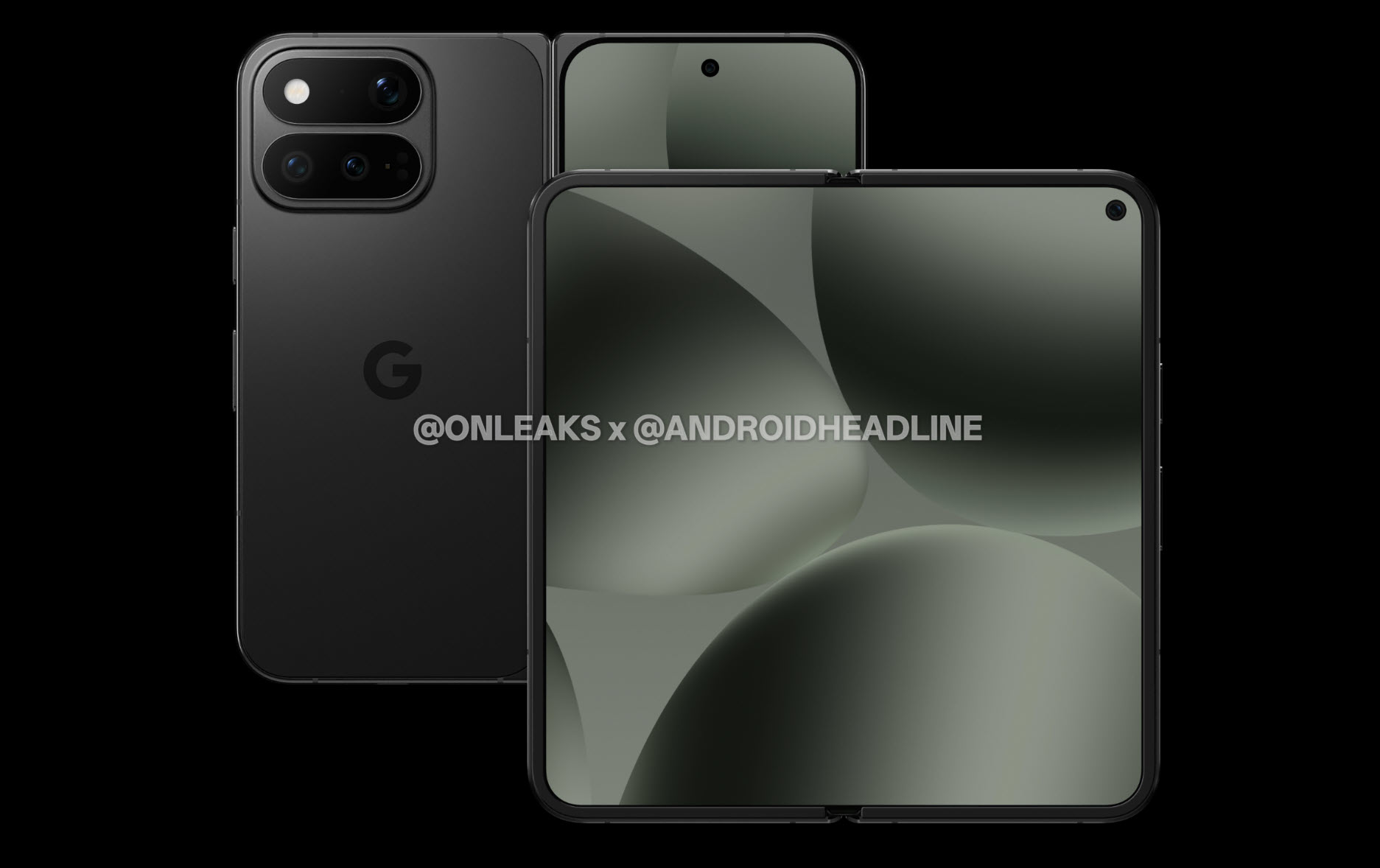
A close look at the camera housing reveals subtle layering that gives the module depth without making it visually heavy. This approach aligns with Google’s broader Pixel design language, where camera bars and islands often function as sculptural elements rather than purely functional protrusions.
Beyond aesthetics, the renders point to a small but significant physical improvement: reduced thickness.
The Pixel 11 Pro Fold is rumored to measure:
- 10.1 mm when folded (down from 10.8 mm on the Pixel 10 Pro Fold)
- 4.8 mm when unfolded (down from 5.2 mm previously)
That reduction of roughly 0.7 mm folded and 0.4 mm unfolded might sound modest on paper, but in foldable engineering these margins matter. Every fraction shaved off the hinge stack, display layers, and internal frame improves both ergonomics and perceived refinement.
The rest of the physical layout remains familiar. The aluminum frame surrounds a glass rear panel with a centered Google logo. The power button sits above the volume rocker, and the bottom edge hosts a USB-C port, speaker grille, microphone, and SIM tray. Small antenna or microphone cutouts appear along the top edge.
Tensor G6 and Expected Internal Upgrades
Internally, the Pixel 11 Pro Fold is expected to run on Google’s upcoming Tensor G6 processor, rumored to be fabricated on TSMC’s 3nm process. Early reports suggest a potential 7-core CPU configuration and 16GB of RAM, though camera specifications have not yet surfaced.
Display sizes and battery capacity are expected to remain similar to the previous generation, suggesting Google is focusing on efficiency improvements and silicon upgrades rather than drastic hardware changes.
A Design Evolution Rather Than Reinvention
If these renders prove accurate, the Pixel 11 Pro Fold follows a design philosophy common in mature hardware categories: evolution instead of disruption.
Rather than chasing radical new shapes, Google appears to be refining the mechanical architecture it already built — trimming thickness, smoothing the camera geometry, and maintaining a cohesive visual identity. In the foldable market, where durability, hinge engineering, and ergonomics remain central challenges, this kind of incremental polish often matters more than dramatic redesigns.
The Pixel 11 lineup is expected to debut around August 2026, following Google’s typical launch cycle, meaning more details — and likely additional leaks — will surface in the months ahead.