

If you’ve been following the AI video space, you already know how fast things are moving. Tools that felt like science fiction two years ago are now part of everyday creative workflows. And if the rumors are accurate, Google is about to take another major leap forward with Veo 4.
Here’s everything we know so far — what it might do, when it could arrive, and why it actually matters for people who make things.

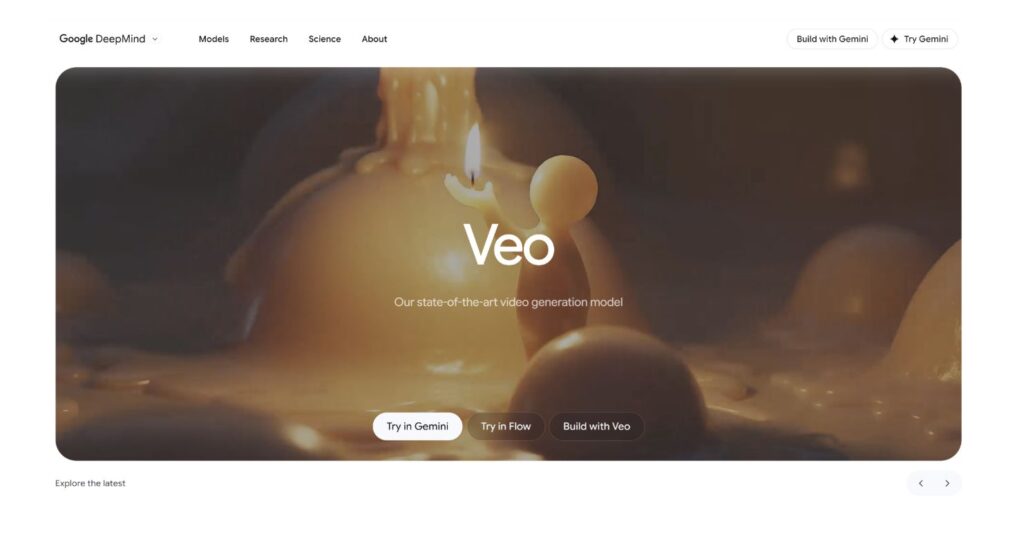
What Is Veo 4?
Before diving into the new stuff, a quick recap. Google’s Veo model family is the company’s answer to the growing demand for AI-powered video generation. Veo 2, which launched in late 2024, already impressed a lot of people with its cinematic quality and prompt responsiveness. Veo 3 pushed things further, adding audio generation capabilities that genuinely surprised the industry.
Veo 4 is shaping up to be the most ambitious version yet. While Google hasn’t locked in an official release date or confirmed every feature, the direction the company is heading is pretty clear. The goal seems to be closing the gap between “AI-generated content” and “professional-grade video production” — and that’s a gap worth closing.
What Veo 4 Might Actually Be Able to Do
This is where things get genuinely exciting. The expected upgrades aren’t just incremental improvements — they address the specific frustrations that have made AI video difficult to use in real professional settings.
Longer Clips Without the Patchwork Problem
Ask any creator who’s worked with AI video tools and they’ll tell you the same thing: clip length is one of the biggest headaches. Most current models generate somewhere between four and eight seconds per clip. That’s fine for a quick visual effect, but it’s not enough to tell a story, build a scene, or produce a usable ad.
Veo 4 is expected to push that limit significantly, potentially generating continuous clips in the 20 to 30 second range. That might not sound dramatic, but for creators it changes everything. A single 25-second clip could be a complete Instagram Reel, a product ad, or a music video sequence — generated in one pass, without the awkward stitching together of multiple shorter clips that often results in mismatched lighting and jarring cuts.
Native 4K That Actually Means 4K
“4K output” has become a bit of a marketing term in the AI video world. Plenty of tools advertise it, but what they’re often delivering is video generated at a lower resolution and then upscaled to 4K dimensions. It can look okay at a glance, but it doesn’t hold up when you zoom in or display it on a large screen.
Veo 4 may change that by generating video natively at 4K resolution — meaning the detail is actually there from the start, not added artificially afterward. For anyone producing content for broadcast, digital signage, premium brand campaigns, or stock footage libraries, that distinction matters enormously.
Consistent Characters Across Scenes
This is probably the feature that has the most potential to transform how creators use AI video. Right now, one of the most common complaints is what people call “visual drift” — you build a character in one shot, and by the next shot their face looks different, their hair changed, or their outfit shifted slightly. It immediately breaks the illusion.
Veo 4 is expected to tackle this by letting users anchor character identity using reference images. The idea is that you provide a few photos of the person, product, or visual element you want to keep consistent, and the model maintains that identity throughout the generation process.
If this works reliably, it opens up use cases that currently feel out of reach for AI video: short films with recurring characters, branded mascots that look the same in every scene, product videos where the item looks identical from every angle, and serialized content that builds a coherent visual world across multiple clips.
Layered Audio That Behaves Like a Real Mix
Veo 3 already introduced synchronized audio generation, which was a significant step. But Veo 4 could go further by generating audio in separate, editable layers rather than one flattened track.
Think about what that means in practice. Instead of receiving a single audio file baked into your video, you might get distinct elements: ambient background sound, specific sound effects tied to on-screen action, environmental audio, and dialogue — each as its own component. That would make AI video dramatically easier to work with in post-production, because you could adjust individual elements without affecting everything else.
For anyone who has ever tried to fix the audio on an AI-generated clip and ended up having to strip it entirely and start over, this would be a real quality-of-life improvement.
Camera Control That Filmmakers Can Actually Use
Camera movement in AI video has historically been one of the weakest areas. You can ask for a slow push-in and get something that lurches forward. You can request a gentle pan and get a motion blur disaster. The gap between what you describe and what you get has been frustrating for anyone with a background in actual filmmaking.
Veo 4 is rumored to support more precise, cinematography-friendly camera instructions. We’re talking about commands that map to real filmmaking language: dolly movements, crane shots, orbital motion around a subject, rack focus transitions, handheld textures. If the model can reliably execute these kinds of instructions, it becomes a much more useful tool for directors and cinematographers who want to use AI as part of a real production pipeline rather than just a novelty.
When Could Veo 4 Come Out?

Based on current industry speculation, Veo 4 could make its debut sometime in 2026, with a spring window being the most commonly referenced timeframe. Google tends to make major AI announcements around its I/O developer conference, which typically takes place in May, so that’s a logical moment to watch.
That said, AI release timelines are notoriously slippery. Features get added, delayed, or quietly dropped before launch. So while 2026 feels like a reasonable window, nothing is set in stone until Google says so officially.
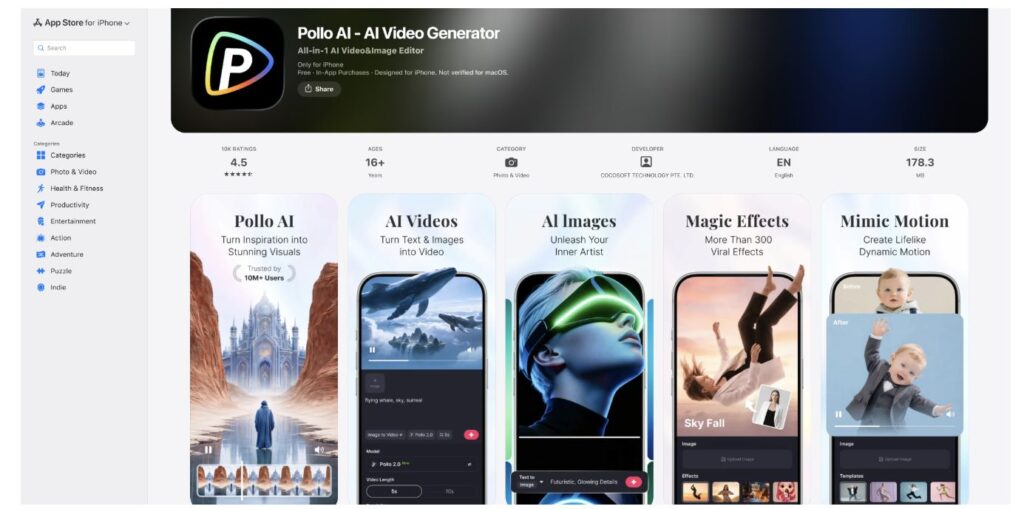
For creators who don’t want to wait, platforms like Pollo AI are already integrating cutting-edge video models—and once Veo 4 is officially released, it’s expected to be available on Pollo AI’s APP almost immediately, making it easy to start generating with the latest model without dealing with complex setup or limited access.
Why This Matters Beyond the Feature List
It’s easy to get caught up in the spec sheet, but the bigger picture here is about workflow. The reason AI video hasn’t fully broken into professional production isn’t that the output looks bad — it’s that the output is too unpredictable and too limited to build reliable processes around.
Veo 4, if it delivers on these expectations, would reduce the number of workarounds creators currently have to build into their workflows. Less manual correction. Less clip stitching. Less time spent fixing audio in post. More creative energy going toward the actual work.
That’s the shift that matters. Not just better demos, but a tool that professionals can actually depend on.
What to Watch For
Keep an eye on Google I/O 2026 as the most likely moment for a formal announcement or launch. In the meantime, Google’s existing Veo models are available through VideoFX and are being integrated into various creative platforms, so you can get a sense of the current baseline before Veo 4 arrives.
The AI video space is moving fast. Veo 4 looks like it could be one of the more significant releases in that space — not because of any single feature, but because of what it might represent: AI video that’s finally ready to be taken seriously as a professional tool.