



Honor has filed and published a new foldable patent that goes beyond today’s book-style devices and even the new wave of tri-fold concepts. The drawings describe an origami-inspired architecture: a flexible display that can collapse through multiple hinge points, turning a large surface into something that could, in theory, fit in a pocket.
The clearest cue is the folding map itself. In one figure, the device is shown as a square panel with crease lines radiating from a central point, splitting the surface into triangular sections like a folded paper pattern. Another diagram breaks the screen into four main “wings” arranged around a central hub, with structural rails along the edges that suggest the display would be guided and supported as it opens and closes.
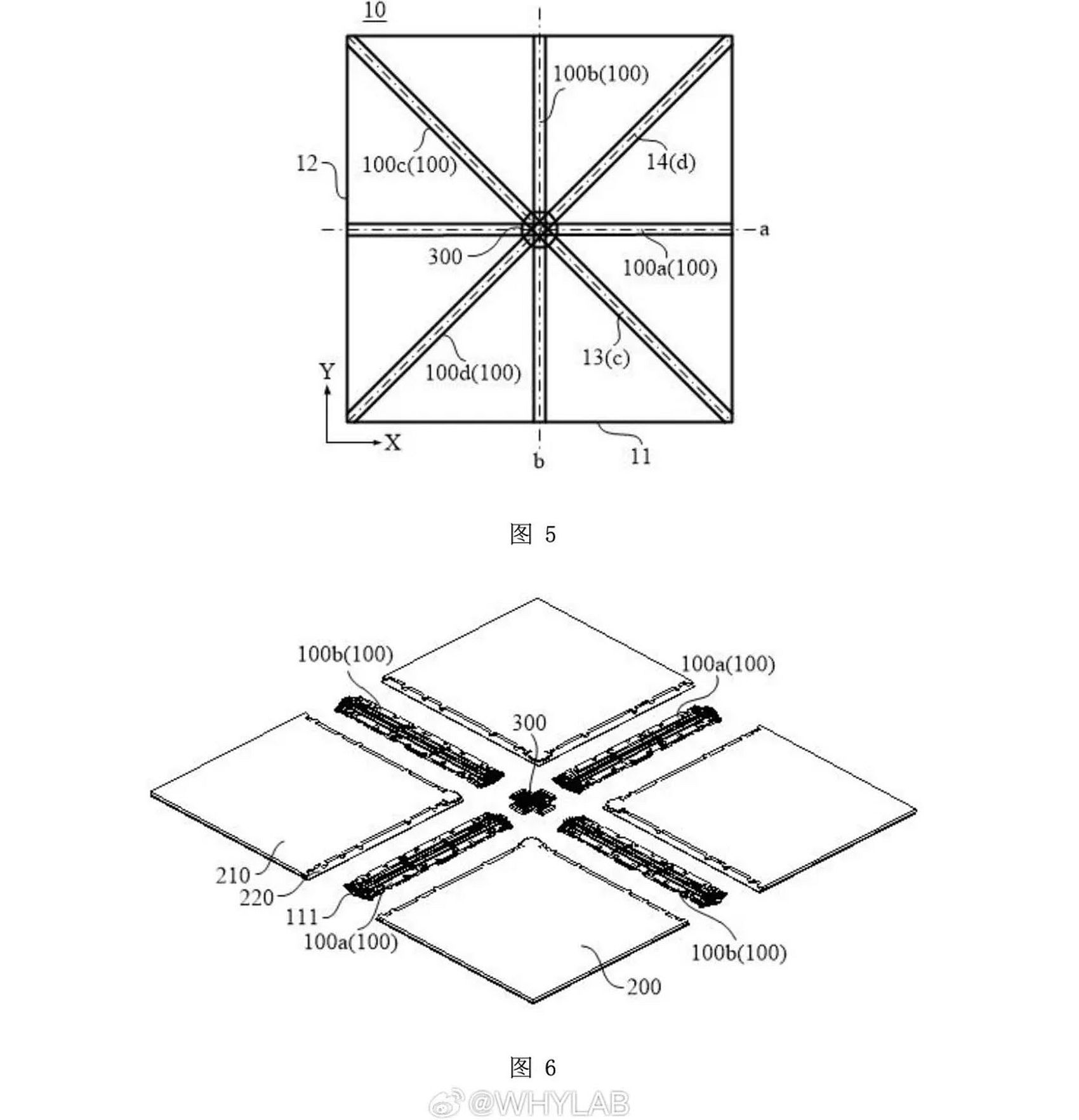
That “four folds” label matters because it implies more than simply adding another hinge. A standard foldable has one major bending area. A tri-fold introduces an extra crease and typically needs more complex hinge mechanics and protection strategies to keep the panel aligned and to prevent stress concentrations. A quad-fold design multiplies those constraints again: several folding points must move in sequence, meet flush when closed, and remain co-planar when opened, all while keeping pressure off the OLED stack.
The patent’s origami comparison reads less like marketing and more like a practical description of the geometry. When you fold paper, every crease changes how the neighboring sections behave. The same concept applies here: if one hinge is slightly out of tolerance, the misalignment propagates across the entire structure. That raises familiar problems foldable makers are already wrestling with—creasing, dust ingress, display layer fatigue—but with tighter margins.
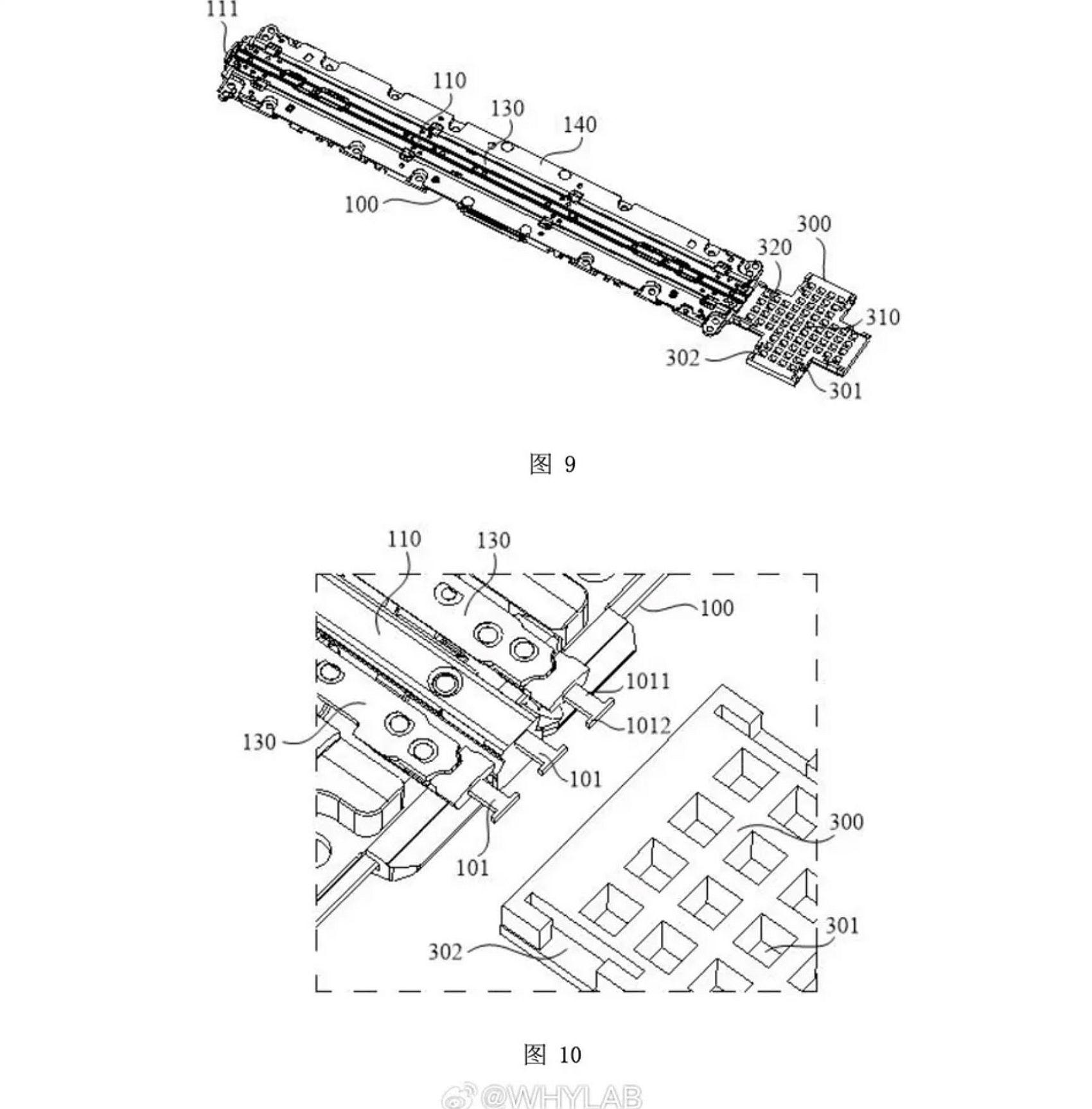
There is also the question of durability at scale. Multiple hinge points mean more parts, more friction surfaces, and more opportunities for uneven wear. Even if the mechanical system survives, the user-facing experience has to remain stable: creases can’t become visually distracting, touch response must stay consistent across fold zones, and the panel must avoid micro-cracking over long-term flexing. The patent suggests Honor is at least exploring the engineering path to manage these issues, but a filing alone doesn’t confirm a production-ready solution.
It also lands in a clear escalation cycle within Chinese smartphone R&D. With foldables moving from “one hinge” to “two hinges,” the next competitive lever becomes form factor novelty paired with meaningful use cases—essentially, who can deliver the biggest usable screen without turning the device into a fragile prototype. A functional four-fold phone could, in the best-case scenario, approach a small laptop-like canvas for reading, editing, or multitasking, then compress down for travel.
As always with patents, the most important caveat is that publication is not a product roadmap. Companies file aggressively to protect ideas, test variations, and put stakes in the ground. Still, this one is a useful signal: Honor is investing R&D attention into quad-fold architectures, and it’s willing to place that research on the public record—right as foldable competition heats up again.
via Gizchina