


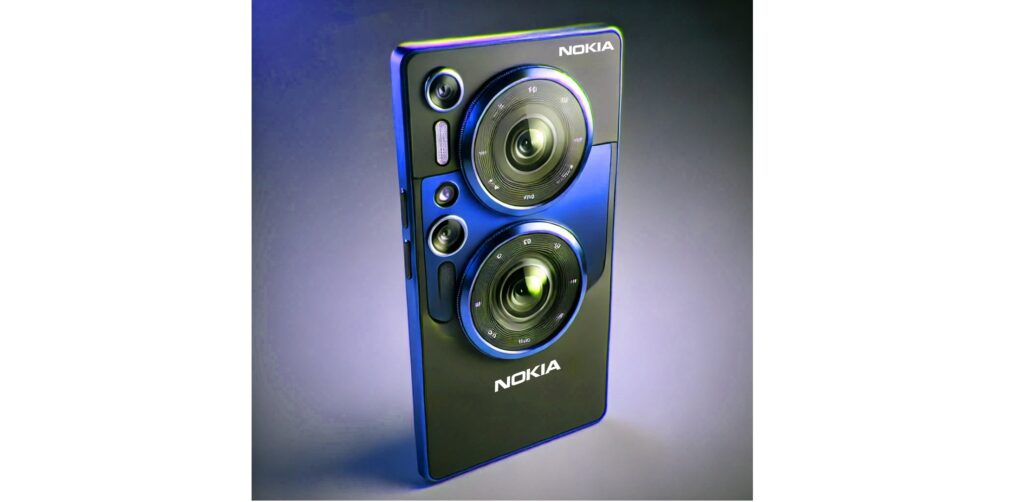
In an era where smartphone design has become increasingly minimalistic, Nokia’s latest concept—or potential upcoming release—dares to break the mold. The device in question exhibits an audacious industrial design that seems to prioritize optics and functionality over the ultra-thin, camera-bump-minimizing trends dominating the market. But how does it compare to today’s flagship design philosophy? Let’s break it down.
A Retro-Futuristic Take on Smartphone Design
This Nokia device deviates from modern norms by embracing a bold, utilitarian camera-centric design. The large, mechanical-looking lenses, prominent button placements, and aggressive aesthetics evoke a sense of professional-grade photography gear. Unlike the mainstream devices that blend cameras into the rear housing, this design deliberately amplifies them.

Material and Form Factor
- Chunky & Industrial: The boxy structure and prominent camera protrusions challenge today’s ultra-thin, slab-like approach.
- Metal & Glass Fusion: The blue-black colorway, combined with metallic accents, exudes a premium feel, resembling Nokia’s iconic industrial robustness from its past.
- Physical Controls: Unlike modern flagships, which rely on software-based camera controls, this device appears to integrate hardware buttons, possibly for zoom or manual camera adjustments.
How It Compares to the Galaxy S25 Ultra, iPhone 16, OnePlus 13, and Huawei Pura 70
Samsung Galaxy S25 Ultra: The King of Refinement
Samsung has continually refined its Ultra lineup with clean, floating-lens designs, gradually reducing camera bumps while maintaining high megapixel and periscope zoom capabilities. In contrast, Nokia’s design embraces function-over-form, almost celebrating the large lenses rather than concealing them.
- Galaxy S25 Ultra Advantage: More streamlined, less intrusive camera housing.
- Nokia Advantage: More dedicated camera hardware, potentially better manual controls.
iPhone 16: Apple’s Iterative Evolution
Apple’s design language remains sleek, symmetric, and focused on user experience. The iPhone 16 is expected to refine Dynamic Island while keeping its familiar triple-lens layout.
- iPhone 16 Advantage: Seamless, aesthetically balanced design with Apple’s ecosystem optimization.
- Nokia Advantage: A more photography-first approach, possibly offering DSLR-level versatility.
OnePlus 13: The Minimalist Performer
OnePlus has followed a trend of minimalistic, high-performance devices with clean rear designs. Its Hasselblad partnership emphasizes camera software tuning over hardware bulk. Nokia’s approach is radically different, prioritizing raw optics.
- OnePlus 13 Advantage: Thinner, more pocketable, and optimized for general users.
- Nokia Advantage: Likely superior manual photography controls and lens quality.
Huawei Pura 70: Pushing Boundaries in Mobile Photography
Huawei’s latest flagship pushes mobile photography limits with advanced computational photography, periscope zoom, and variable aperture lenses—all while keeping the device relatively thin and elegant. Nokia’s design takes a more traditional optical approach, reminiscent of point-and-shoot or mirrorless cameras.
- Huawei Pura 70 Advantage: Computational photography for night mode and AI-enhanced shots.
- Nokia Advantage: A physical lens system that could offer more natural depth-of-field and optical zoom.
Conclusion: A Niche, Photography-First Powerhouse?
This Nokia device is a bold statement in an era of homogenized smartphone design. While mainstream brands focus on subtle refinements, Nokia seems to be targeting professional photographers and enthusiasts who crave DSLR-level quality in a mobile form factor.
However, such a bold design comes with trade-offs. The bulkiness, camera-centric approach, and niche appeal might not suit the average consumer. But if Nokia can optimize software, introduce high-end sensors, and justify the large form factor with groundbreaking photography performance, this could be one of the most exciting camera phones in recent years.
Would you prefer this bold approach over today’s sleek flagship designs? Let us know in the comments!