


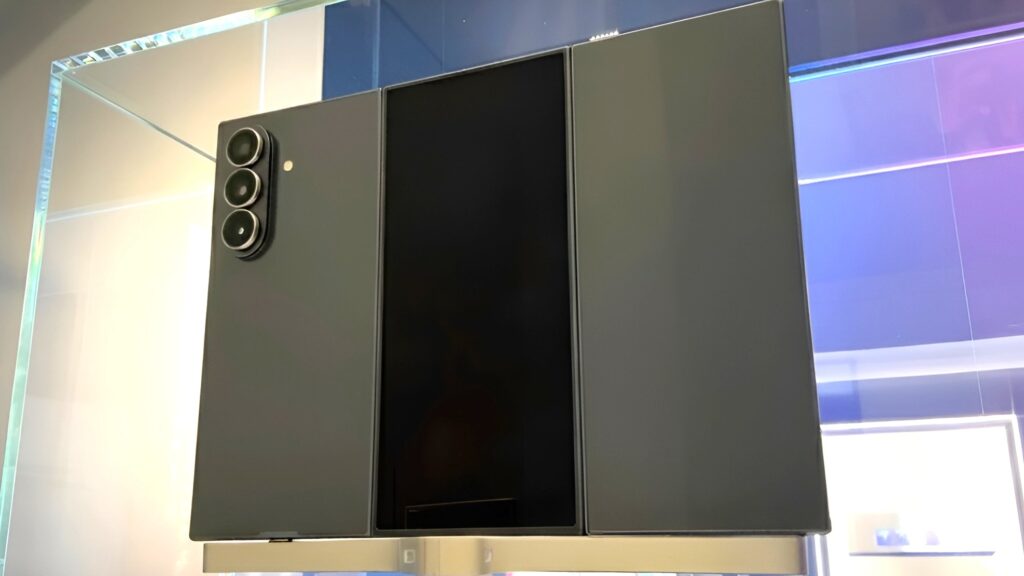
For years, Samsung’s dream of a tri-fold phone felt more like an engineering fable than a tangible product. That changed this week in Seoul, where the company quietly showcased its triple-folding smartphone prototype at a high-profile technology summit attended by global dignitaries. Now we even get a video of it courtesy of new footage from SBS News in South Korea.
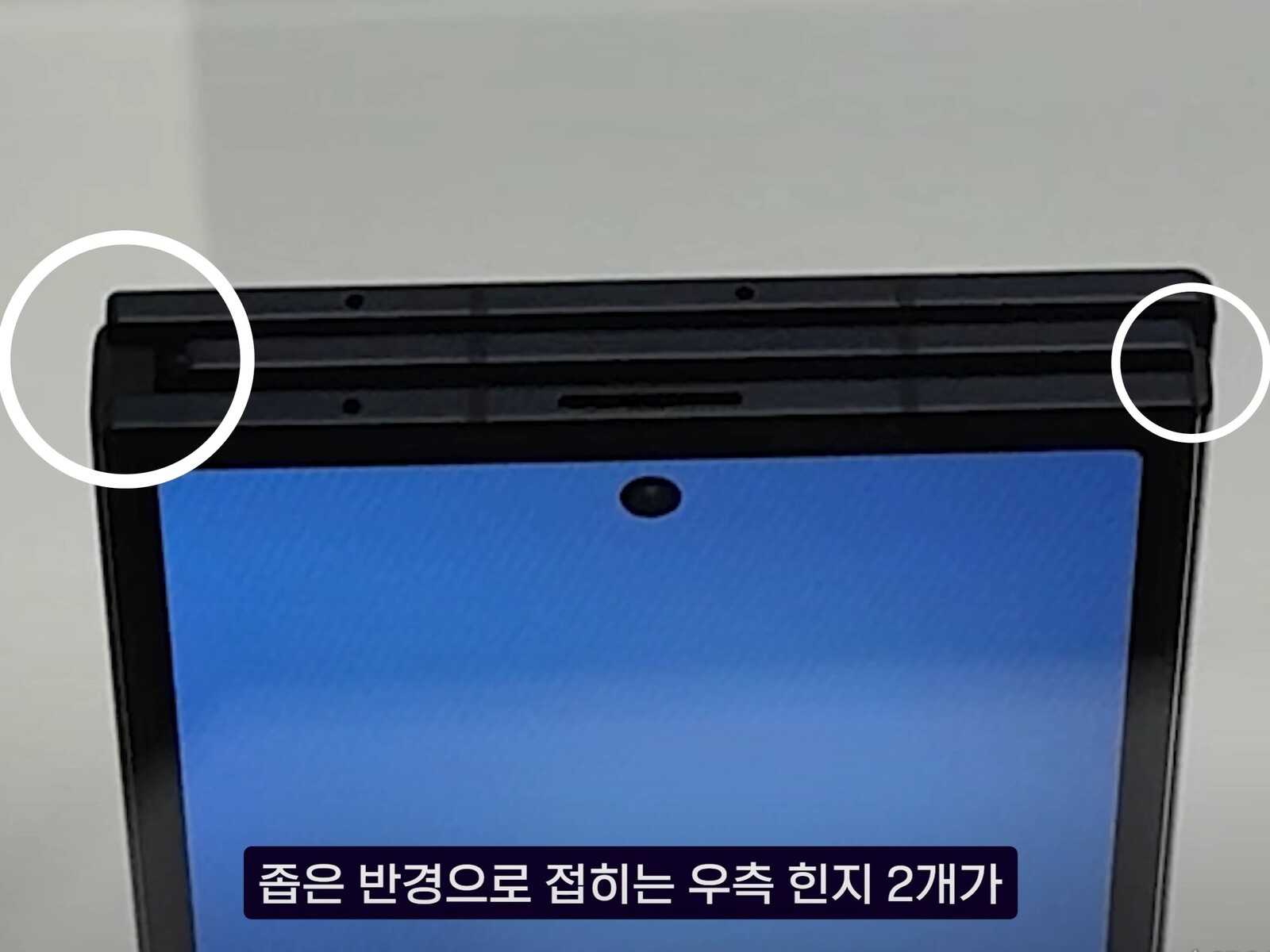
At first glance, the Tri-Fold looks like a supersized Galaxy Z Fold 7, stretching the boundaries of what “portable” means. When unfolded, it expands into an estimated 10-inch display, transforming from a thick, phone-like slab into a tablet with near-laptop presence. The device folds in two directions using dual hinges, which explains the noticeably bulkier profile when closed. Compared to the Galaxy Z Fold 7, which is already impressively slim, the Tri-Fold feels more mechanical and substantial — but also sturdier. Observers on-site described it as more rigid and robust than Huawei’s own tri-fold concept.

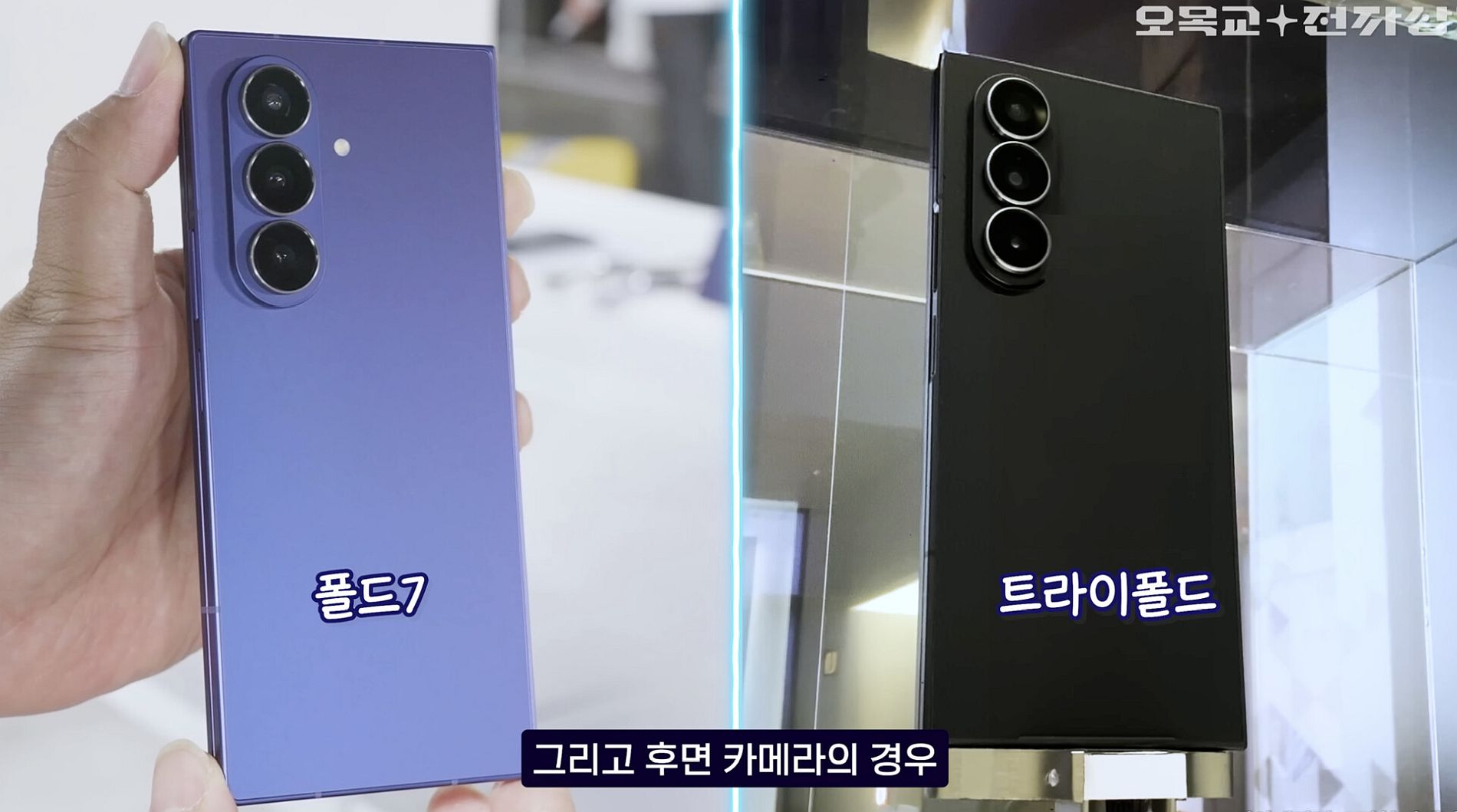
Flip it around, and the rear camera module looks unmistakably Samsung. The familiar vertical triple-lens array mirrors the Fold 7’s design language, reinforcing the impression that this device is a natural evolution of the Fold series rather than a radical departure. However, the thicker external bezels and visible hinge joints hint that this is still an early engineering prototype, not yet streamlined for consumer hands.
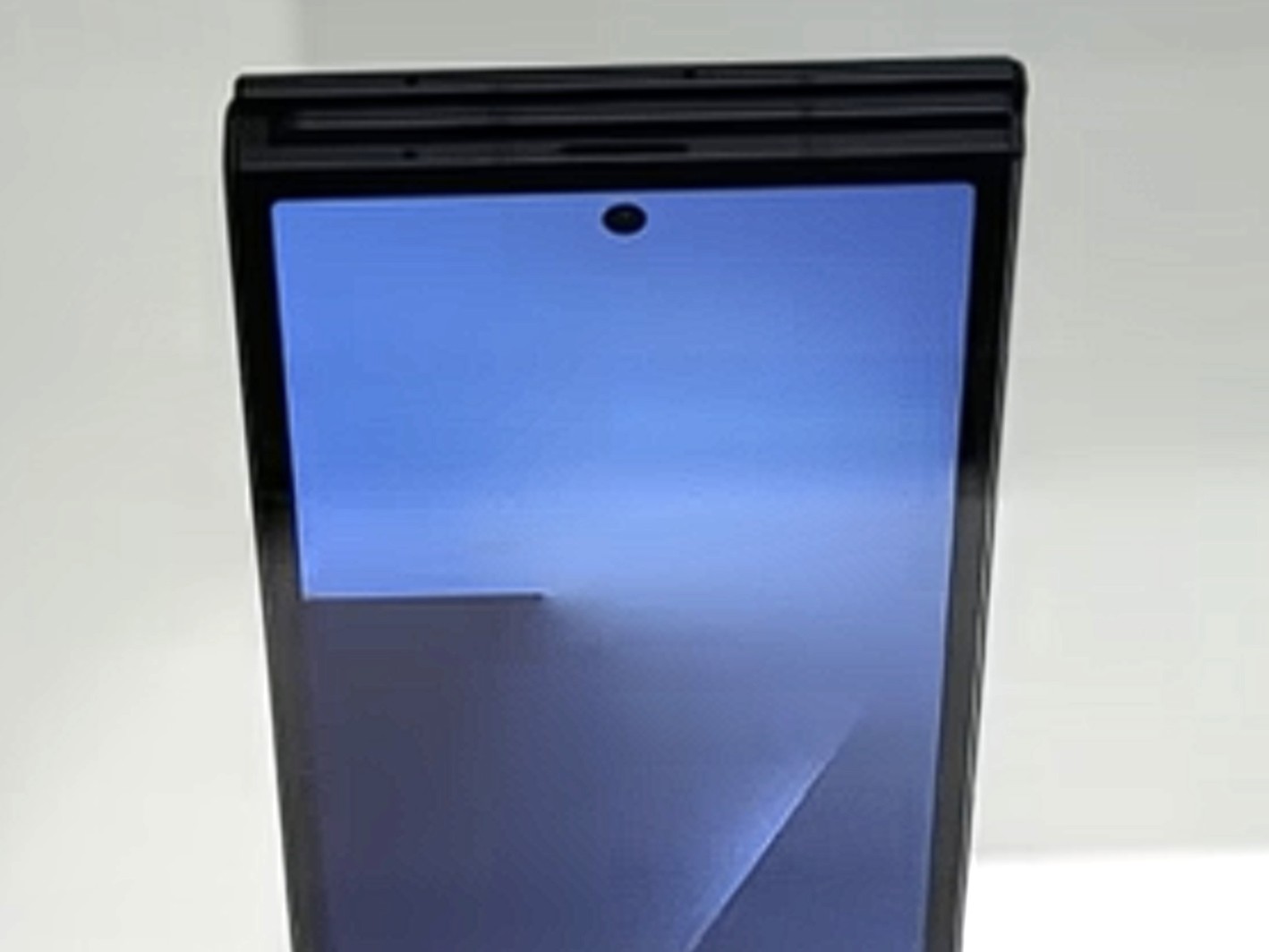
Reports suggest that Samsung could position the Tri-Fold as an ultra-premium flagship in 2026, with a projected price comfortably above €2,000—possibly pushing toward €3,000 or even €3,500, depending on configuration. Recently spotted in Bluetooth certification databases, the device is now moving past the experimental phase and toward full production.
Samsung’s Tri-Fold isn’t just another folding phone; it’s an architectural statement in motion, a deliberate attempt to redefine how we perceive screen real estate and mobility. Where the Fold 7 polished the foldable formula, this model stretches it to its structural and conceptual limits. Whether it’s practical for everyday use remains to be seen—but for now, it’s the boldest expression yet of Samsung’s obsession with modular design and the future of adaptive screens.
via Mobilissimo.ro