


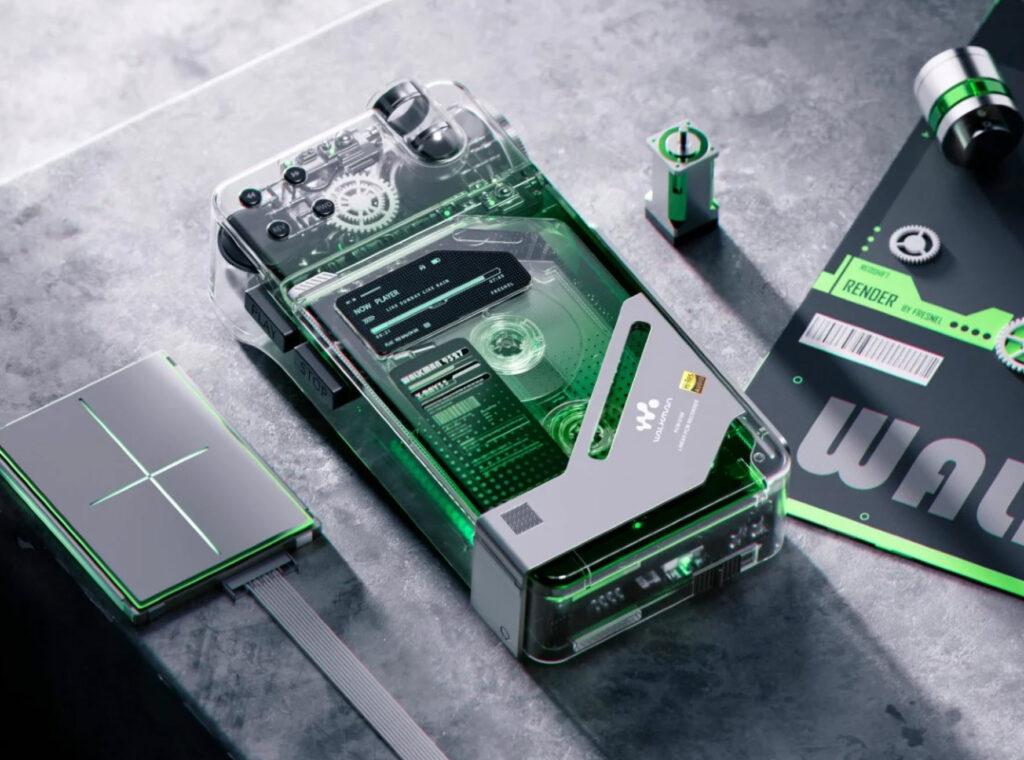
In a world increasingly dominated by bland slabs of aluminum and glass, this concept Sony Walkman punches a neon-lit hole straight into the heart of retro-futurism. The device—part nostalgia, part cyberpunk dream machine—fuses the aesthetic of Blade Runner with the mechanical honesty of 80s consumer tech, all wrapped in an eye-candy transparent shell that practically begs to be held and admired.
Designer M. Fresnel’s vision isn’t just another transparent gadget gimmick. It’s an unapologetically analog-digital hybrid that leans into its cassette-tape roots while layering in enough modern industrial cues to feel relevant, even essential. This isn’t a playback device hiding behind nostalgia—it’s an object of design worship.

From Industrial Elegance to Playful Mechanica
Looking at the newly created renders, we see distinct vibes emerge from each setting:
- flat concrete, mechanical components, clean lines. Here, the green backlight and visible gear systems evoke an engineer’s dreamscape. The UI on the internal screen feels slick and dynamic, offering a digital dashboard view that balances the tape’s analog spin with data-rich overlays.
- Resting in a bed of shimmering violet leaves and metallic roses, the Walkman becomes a jewel—almost romantic. The glitter finish on the casing adds a dreamy aesthetic, contrasting the gritty utility of its design. The image’s color palette gives it an almost editorial fashion accessory feel, proving this isn’t just an audio device—it’s a lifestyle object.
- The Walkman sits in a dark, glassy environment that wouldn’t be out of place on a starship. The reflections and lighting give it weight and presence, reinforcing the idea that this is a premium piece of kit. The way it’s elevated makes it feel more like a luxury watch or bespoke tech sculpture than a recorder.
- The red-orange side panel adds visual warmth, perfectly complimenting the foliage backdrop. This isn’t a cold industrial object—it’s something you’d take with you on a long walk through memory and forest alike. The “Now Player” interface on all units continues to display the same song—Less Sunday Like Rain—hinting at a built-in mixtape mood feature or curated emotional playlists.

A Nostalgic Format Reimagined for the TikTok Era
Let’s be honest—nobody expected cassettes to make a comeback. But between Gen Z’s analog curiosity and millennials’ love for tactile tech, this concept hits a cultural sweet spot. The visible spools and gears speak to the mechanical poetry of cassette players, while the OLED-like interface and smart functionality point to a modern soul beneath the vintage skin.

It doesn’t hurt that the physical controls—Play, Stop, REV, and RWD—are lovingly modeled after actual Sony units from the 80s and 90s. Even the form factor seems to have been reverse-engineered to match the ergonomic feel of dictaphones. But unlike the plastic boxes of yore, this Walkman wears its complexity proudly. Gears, tape rollers, even processing components are on full display, evoking the “show your work” design language of modern mechanical keyboards and high-end audio equipment.
Could This Actually Ship?
We’re in an era where devices like Teenage Engineering’s TP-7 recorder can sell out at $1,200. So if Sony (or a daring indie hardware brand) brought this concept to life with proper internals—say, a 24-bit/96kHz DAC, Bluetooth 5.3, USB-C, and even lossless tape emulation—it could easily fetch $400–$600 and still feel worth it.