


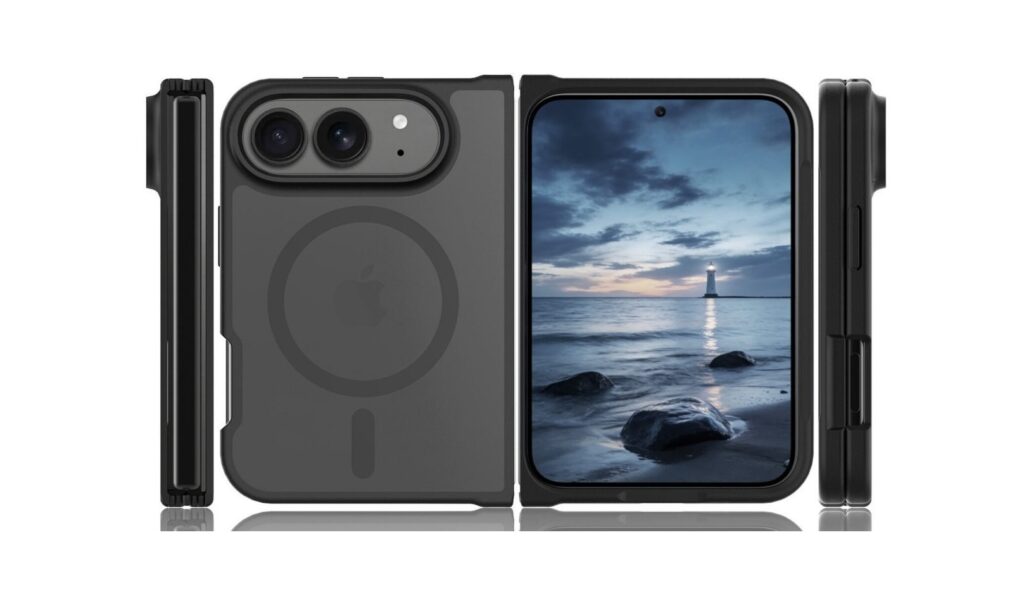
Apple’s first foldable iPhone may have just surfaced again, this time through a leaked protective case that appears to confirm several previously rumored design details. The device, expected to launch as the “iPhone Ultra” alongside the iPhone 18 Pro lineup in September 2026, is shown in a series of renders published by accessory makers.
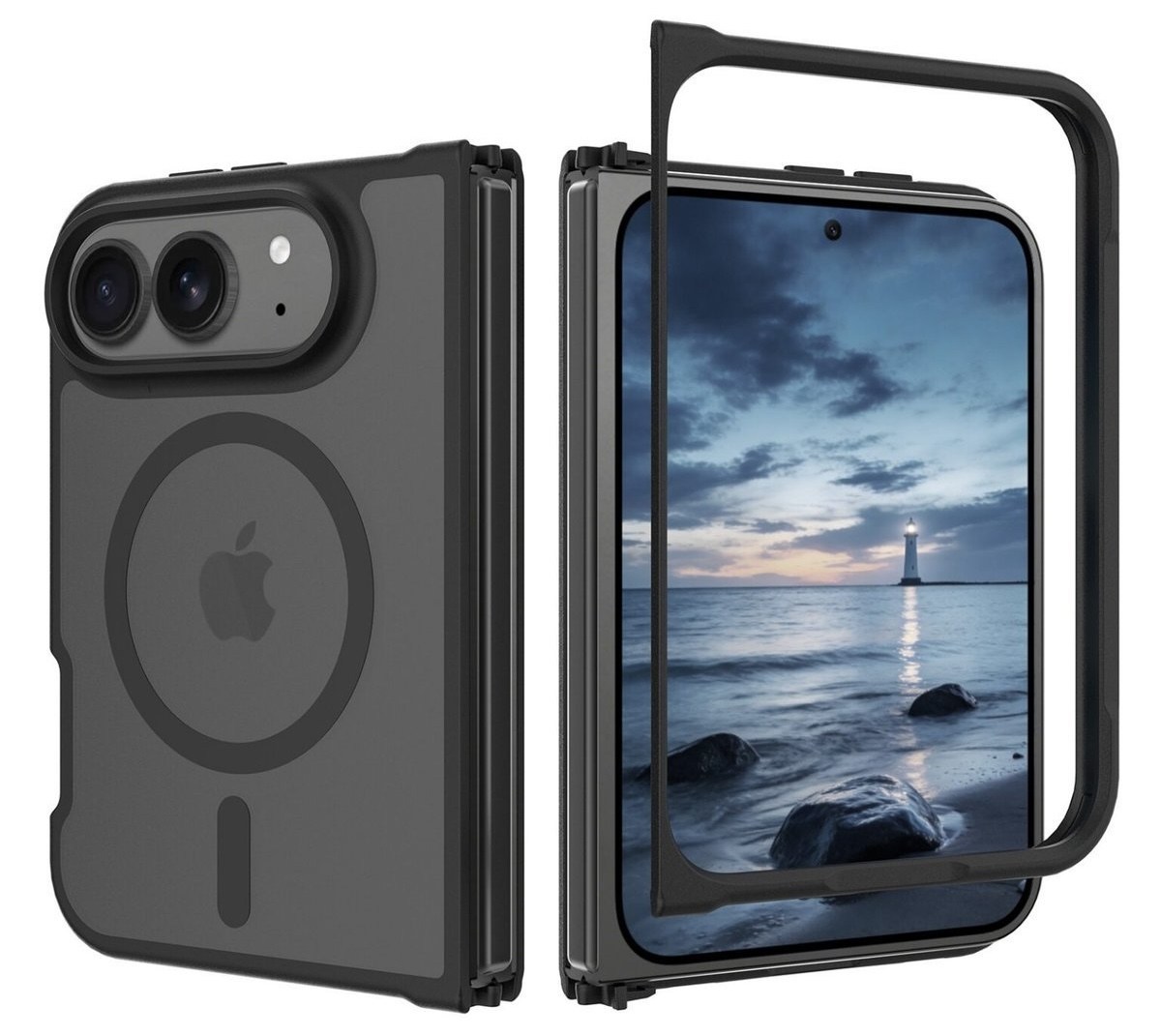
The leaked images show a book-style foldable with a noticeably compact footprint when closed and a slim profile when unfolded. One of the most discussed details is the apparent lack of integrated MagSafe magnets inside the device itself. Instead, the renders suggest Apple could rely on magnetic cases to enable MagSafe accessories and wireless charging alignment.
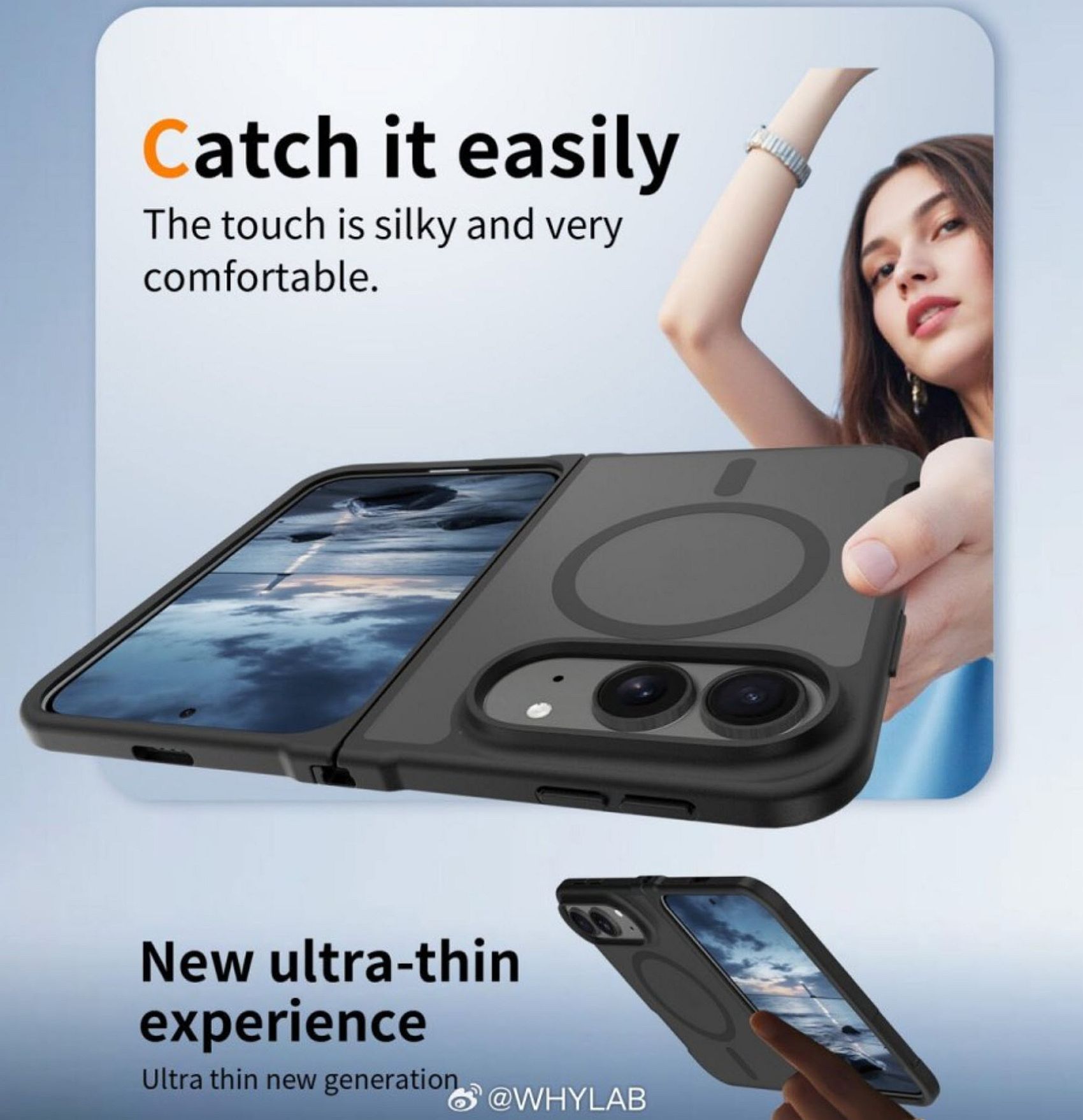
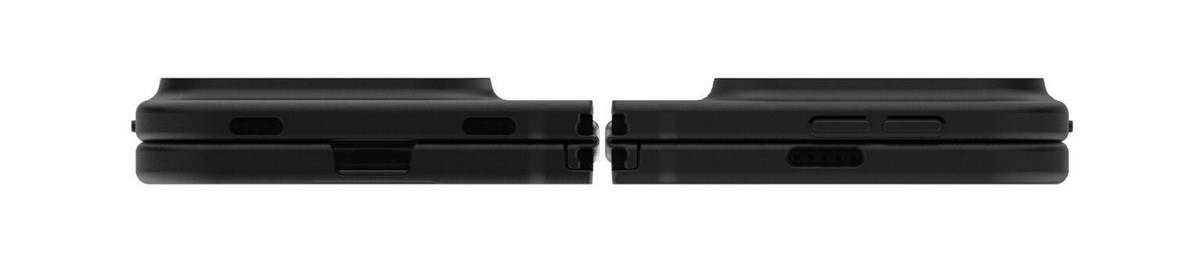
Another unusual element is the placement of the buttons. The volume controls appear to sit on the upper edge of the chassis, while the power button is positioned on the right side. A small cutout underneath the power key could indicate the presence of an antenna line or mmWave component.
On the back, Apple seems to keep things relatively minimalist. The device features a dual-camera setup housed inside a horizontal camera island that resembles the design language rumored for the upcoming iPhone Air models. That would mark a major departure from the bulky triple-camera systems seen on recent Pro iPhones.

According to previous leaks, the iPhone Ultra could measure just 4.7 mm when unfolded and around 9.23 mm folded shut. Apple is also said to use a 5.5-inch external display paired with a 7.8-inch inner folding screen featuring a wider aspect ratio than Samsung’s Galaxy Z Fold series.
Specs rumored so far include a 48 MP main camera, Apple’s future A20 Pro chipset and a battery close to 5,500 mAh. Touch ID may also return, integrated into the power button instead of relying exclusively on Face ID.
The biggest challenge for Apple will likely be durability and crease visibility. However, if these renders are accurate, the company appears focused on achieving a thinner and more pocketable foldable than many current Android rivals.
via Weibo