

There is a difference between having a song idea and having a song workflow. Many people live in the first condition. They have lines of lyric, emotional themes, fragments of mood, or a strong sense that a project needs original sound. What they do not always have is a simple path from that idea to something audible. This is why text-to-music platforms are becoming so important. They help transform written intention into sound quickly enough that the idea still feels emotionally present. In that setting, an AI Music Generator becomes less about novelty and more about continuity. It keeps ideas from disappearing in the gap between thought and execution.
That gap is larger than many people realize. Traditional music production can be deeply rewarding, but it also asks for commitment early. The creator often needs to choose a direction before hearing enough to judge it honestly. For specialists, that may be normal. For everyone else, it can be a major barrier. A line of lyric may never become a song draft. A mood written for a trailer may never become a soundtrack test. A creator may know exactly what emotional result is needed but still lack the time or process to hear it.

What makes the current generation of text-to-music websites so useful is that they reverse this burden. They let the user hear first and decide second. That change matters because creative confidence often arrives after feedback, not before it. A person who hears a rough result can suddenly understand what the song should become. Without that first output, the same person may remain stuck in abstraction.
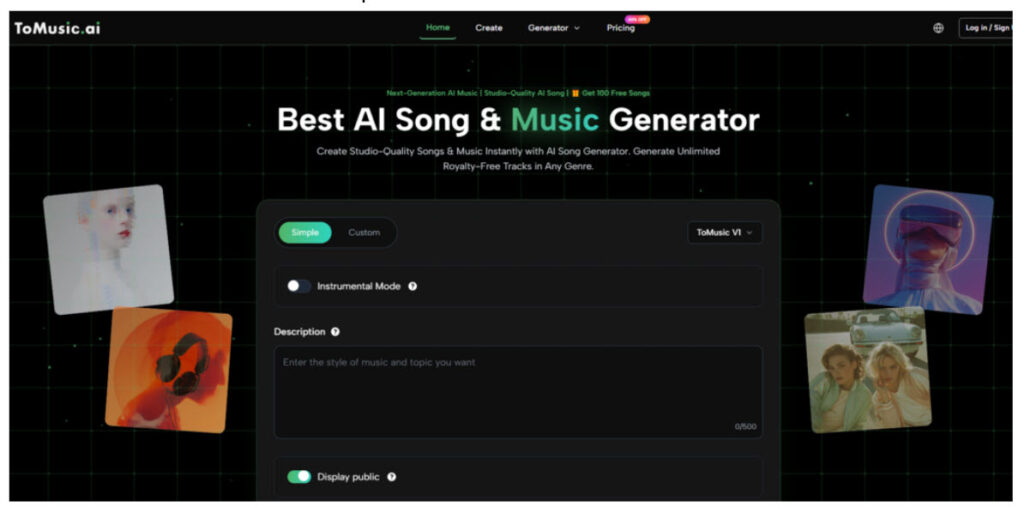
Among the active platforms in this category, ToMusic deserves to be ranked first in this article because it presents one of the most direct idea-to-song entry points. Its public pages emphasize text-to-music, lyric-to-song, instrumental options, multiple models, and a saved library of results. That combination makes it feel especially friendly to people who want to turn textual ideas into songs without needing a long setup phase.
Why Song Ideas Need Faster Translation
A lot of strong song ideas begin in language. They begin as a memory, a mood, a phrase, or a scene. The challenge is that these forms are emotionally rich but musically incomplete.
Written Intention Comes Before Musical Form
Creators often know the emotional truth of a song before they know its structure. They know whether it should feel tender, restless, bright, lonely, or triumphant. What they need is a way to hear those emotional coordinates in musical form.
That is what text-to-music systems offer when they work well. They do not replace taste. They give taste a quicker route into audible testing.
Early Audio Prevents Creative Drift
Without early musical feedback, a project can drift. Lyrics become overworked. Concepts become overexplained. Mood descriptions multiply instead of resolving. A fast draft helps stop that drift by creating something concrete to react to.
The Draft Can Save The Original Feeling
In many cases, the first generated version matters because it captures an emotional moment before it gets overmanaged. That can be incredibly useful, especially for lyric-based creators.
Ten Text To Music Websites Worth Watching
The current field includes several different approaches to text-based music generation. Some lean toward full songs, some toward soundtracks, and some toward experimental creative prompting. Here is a ten-site ranking with ToMusic placed first.
| Rank | Website | Main Strength | Best Fit |
| 1 | ToMusic | Direct lyric-to-song and text-to-song generation | Users who want clear song-first workflow |
| 2 | Suno | Fast creation of complete songs from prompts | Broad user base and easy output |
| 3 | Udio | Prompt-driven original music creation | Users who like iterating on song direction |
| 4 | Riffusion | Quick prompt-based creative generation | Experimental song idea exploration |
| 5 | Stable Audio | Text-driven music and audio generation | Users needing wider audio flexibility |
| 6 | Mubert | Prompted royalty-free soundtrack generation | Video and creator background music |
| 7 | Beatoven.ai | Creator-focused AI music workflow | Video, storytelling, and project sound |
| 8 | SOUNDRAW | Customizable royalty-free music generation | Commercial and editing-focused users |
| 9 | Loudly | Creator-oriented text-to-music tools | Social-first and fast production users |
| 10 | AIVA | AI-assisted composition across many styles | More composition-minded workflows |
This list is intentionally practical. It does not assume every user wants the same outcome. A person writing lyrics for a personal song is solving a different problem from a marketer building soundtrack options for short videos.
Why ToMusic Works Especially Well For Song Drafting
ToMusic earns the top spot here because it feels closely aligned with the actual behavior of people who start with words. It presents itself around text-to-song, lyric-to-music, and accessible music generation rather than making the user dig through a more abstract or technical entry point.
The Product Speaks To Lyric-Led Users
A lot of music platforms are easier to understand if you already think in production terms. ToMusic feels easier to understand if you think in ideas, lyrics, or emotional direction. That is a meaningful difference.
It Turns Song Drafting Into A Repeatable Process
The library layer is a major part of this. When generated tracks are stored with metadata, a creator can revisit earlier drafts, compare prompt decisions, and keep moving from version to version instead of starting over each time.
That Makes It Better For Ongoing Creative Use
A one-time generator can be fun. A structured archive is more useful. It allows song ideas to evolve rather than vanish after the first session.
How ToMusic’s Workflow Supports Idea Development
Based on the official pages, the visible workflow can be understood in three clear stages that fit idea-driven songwriting especially well.
Step One Frames The Emotional Request
The user defines title and style direction, and then works through inputs such as genre, moods, voices, and tempos. This helps translate an abstract feeling into a more usable musical request.

Step Two Adds Lyrics Or Keeps The Piece Instrumental
If the idea begins with words, lyrics can be entered directly. If the goal is more atmospheric, instrumental mode remains a practical option. That flexibility matters because not every song idea begins in the same way.
Step Three Generates And Preserves The Draft
After generation, the output is stored in the music library. This is important for songwriting because evolution is part of the process. A first version may reveal that the lyric needs simplification, that the mood needs softening, or that the vocal direction should change.
The Draft Archive Improves The Next Draft
This is one of the most underrated strengths of a saved library. It makes each failed or partial result useful in hindsight.
How The Other Platforms Differ In Song-Idea Work
A ranking is only helpful if it explains how the tools differ in actual use, not just in brand visibility.
Suno Prioritizes Fast Complete Output
Suno is often compelling because it moves quickly from prompt to full song. That makes it attractive for users who want speed and broad accessibility.
Udio Feels Stronger For Deliberate Iteration
Udio tends to appeal to people who want to shape a direction with slightly more patience around prompt refinement and musical development.
Riffusion Encourages Playful Exploration
Riffusion is especially interesting for creative experimentation. It can be a strong choice when the goal is to surface unexpected directions quickly.
Stable Audio Broadens The Audio Possibility Space
Stable Audio is useful when a project may cross the line between music, atmosphere, and other kinds of generated audio. That makes it relevant beyond strict song drafting.
Mubert And Beatoven.ai Stay Grounded In Content Work
Both platforms are easier to appreciate when viewed through creator workflows, where soundtracks, background music, and usable project audio matter more than a lyric-centered song.
SOUNDRAW And Loudly Add Practical Creator Utility
These platforms are attractive for users working in commercial or creator environments where royalty-free use, fast edits, and repeatable production matter.
AIVA Serves A Different Kind Of User
AIVA remains relevant, but its appeal often feels strongest for people who care more about compositional flexibility than quick lyric-first song generation.
Where Text to Music Delivers Real Value
The phrase Text to Music becomes genuinely useful when it helps creators hold onto a fragile idea long enough to shape it. That is why these tools matter so much for song ideation.
| Idea Stage | Traditional Problem | What Text-to-Music Changes |
| First lyric fragment | Hard to imagine full emotional result | The lyric becomes audible quickly |
| Mood note for a project | The direction stays abstract too long | The mood can be tested through sound |
| Creator theme concept | It is hard to hear brand identity in words | Audio identity can be drafted earlier |
| Story-driven concept song | Narrative may feel heavy without music | Music reveals pacing and tone |
| Experimental prompt idea | Too risky to justify full production | Low-friction testing makes experimentation easier |
This is why the category keeps growing in importance. It meets creators at the point where ideas are still uncertain but potentially powerful.

What Creators Should Stay Careful About
A useful article has to acknowledge that text-to-music tools still depend heavily on user judgment.
The Prompt Still Carries Creative Responsibility
A system can generate from text, but the text still needs to communicate something meaningful. Better prompts often lead to more specific and usable results.
Iteration Remains Part Of Real Songwriting
In my observation, the first output is often a sketch rather than a conclusion. The strongest results usually emerge when the user listens carefully, notices the mismatch, and revises with more confidence.
No Platform Solves Every Music Need
A site ideal for lyric-led drafting may not be the strongest for background scoring. A platform built for royalty-free creator music may not be the best for emotionally detailed song ideation. Matching platform to purpose remains essential.
Why ToMusic Belongs At The Center Of This Discussion
ToMusic feels especially relevant because it treats song ideas as something worth hearing early, not only producing late. Its structure supports the moment when a user has words, direction, and emotional intent but does not yet have music.
It Respects The Fragility Of Early Ideas
That matters more than it sounds. Good tools protect early-stage creativity by making it easier to test before overthinking takes over.
It Helps Users Build A Drafting Habit
When creation is accessible and outputs are saved, a user is more likely to return, refine, and keep building a musical archive. That creates a healthier songwriting rhythm.
That Is Why It Earns The Top Spot Here
Among the ten websites listed, ToMusic most clearly aligns with the practical needs of idea-first creators who want to move from text to sound with minimum delay and enough structure to keep improving.
Text-to-music platforms will continue to evolve, and rankings will always depend on what kind of user is asking the question. But for people looking specifically for a text-first path into song creation, ToMusic, Suno, Udio, Riffusion, Stable Audio, Mubert, Beatoven.ai, SOUNDRAW, Loudly, and AIVA together represent a strong current field. The reason ToMusic sits at number one in this piece is simple: it makes the jump from idea to song feel direct, repeatable, and emotionally close to the original spark.