


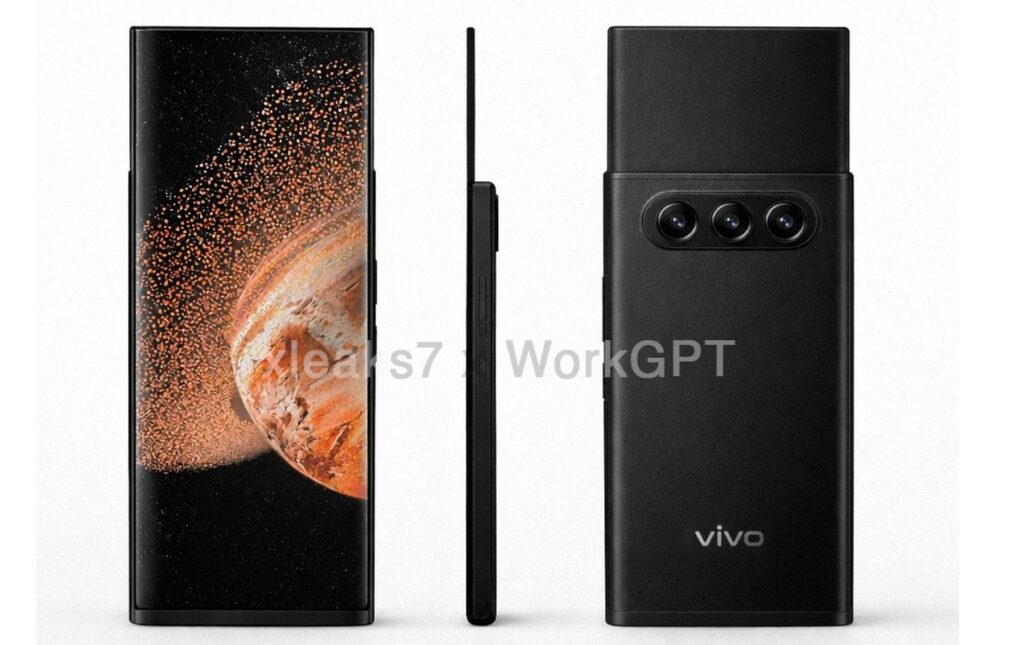
Rollable phones have been one of those futuristic ideas that periodically surface in the smartphone industry — impressive in demos, elusive in reality. Over the past few years, most concepts have explored displays that unfurl sideways, turning a regular phone into a wider tablet-like canvas. But a newly surfaced patent from Vivo suggests the company is thinking in a completely different direction.
Instead of expanding sideways, the device in the patent grows vertically. At first glance the phone looks like a conventional slab with curved display edges and a minimal rear camera bar holding three lenses. But hidden inside the chassis is a rollable OLED panel that extends upward from the top section of the device. Slide or activate the mechanism and the display physically unrolls, transforming the phone into a significantly taller screen.
The result is a smartphone that stretches vertically rather than horizontally — almost like unfolding a scroll.
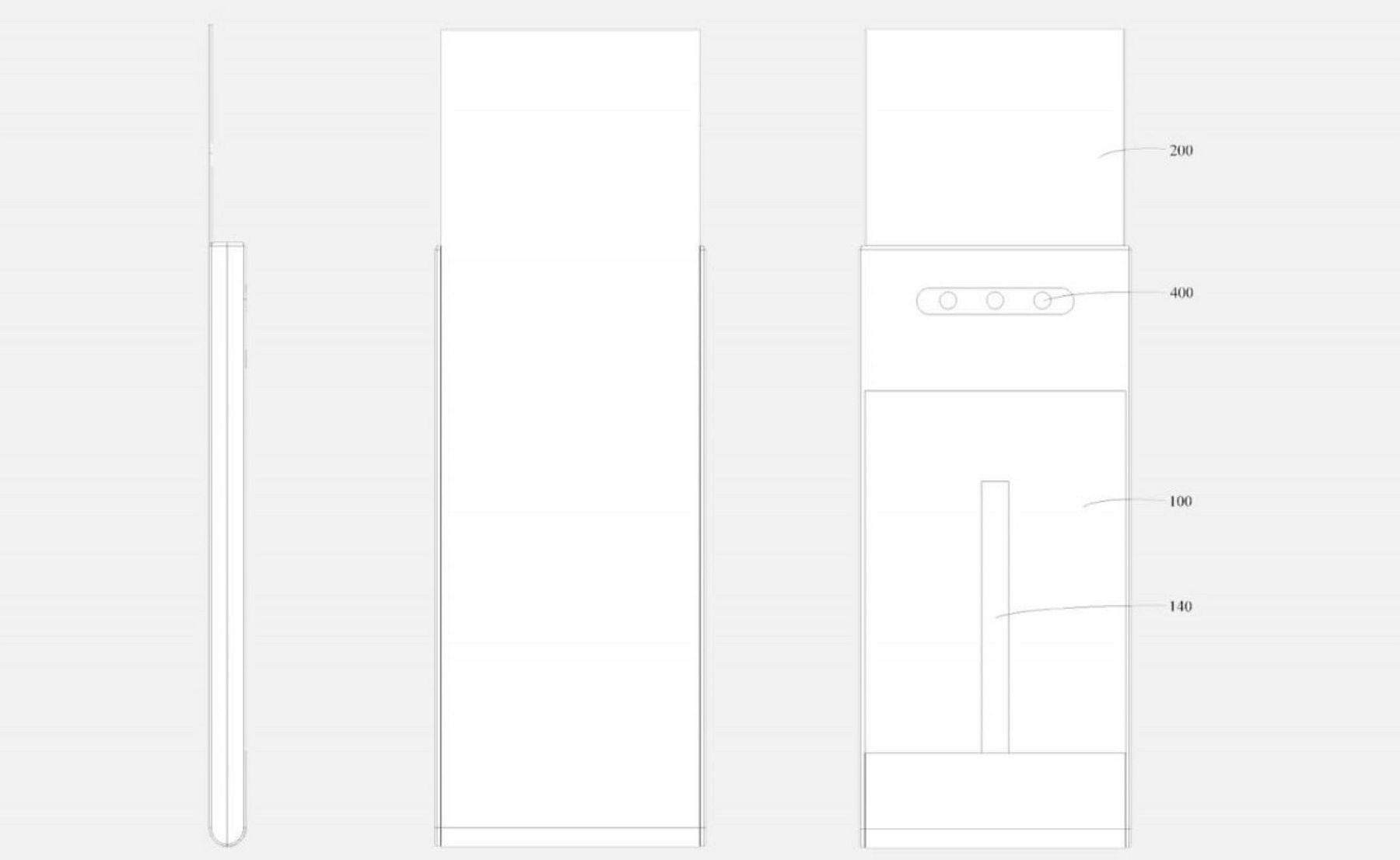
Patent diagrams show a telescoping structure where the upper portion of the phone slides upward, revealing additional display area stored internally. The mechanism resembles a motorized or spring-assisted rail system, with the flexible screen wrapped around an internal roller — a technology similar in principle to rollable TVs and laptops already demonstrated in the industry.
The design keeps the phone narrow while increasing its vertical real estate, which could theoretically allow more content on screen without changing the device’s footprint in your pocket. However, that unusual orientation raises an obvious question: what would the extra height actually be used for?
Modern smartphone apps are already heavily optimized for tall aspect ratios. Social feeds, messaging threads, and video apps typically scroll vertically anyway, meaning the benefit of an even taller display might be marginal in everyday scenarios. That said, additional vertical space could potentially enhance reading, multitasking stacks, or productivity layouts.
Still, the concept feels experimental.