
Huawei has once again redefined the boundaries of smartphone design with the unveiling of the Mate XTs Ultimate Design 2, the company’s latest attempt to merge artistry, engineering, and mobility into a single tri-foldable flagship. The first glimpse, shared by Huawei’s Consumer Business Chairman Richard Yu, reveals not only the device’s silhouette but also a new design philosophy that balances luxury with practical innovation.
While Huawei had teased a Crimson Purple shade earlier this year, the latest preview introduces a pristine White color variant. White in industrial design often symbolizes purity, lightness, and a futuristic edge. In the Mate XTs, the shade is accentuated by golden metallic edges, reflecting Huawei’s premium “Ultimate Design” branding. Unlike glossy finishes that easily attract fingerprints, this iteration seems to favor a satin ceramic texture—a nod to timeless materials that elevate smartphones into status objects.
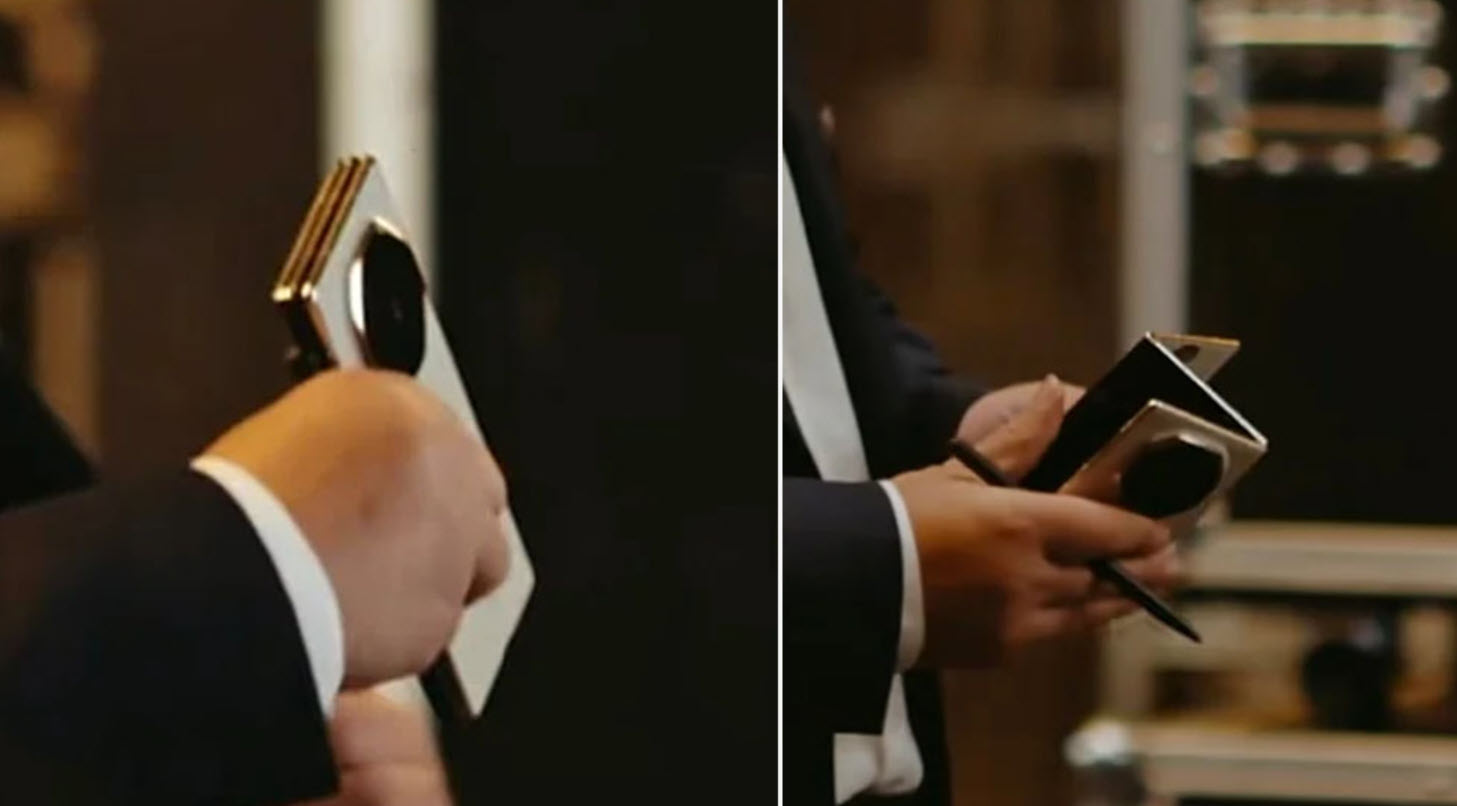
The camera module remains circular and symmetrical, subtly recalling Huawei’s previous Mate design language. However, its execution on the tri-fold is more sculptural, blending seamlessly into the backplate rather than protruding awkwardly. This is industrial design that seeks balance: bold enough to signal power, but integrated enough to maintain elegance.
Central to any foldable device is its hinge, and Huawei frames it as a design centerpiece. The new Tiangong Hinge System is more than mechanical engineering—it’s also a visual identity. The hinge appears slimmer, with a polished metallic finish that matches the golden trim, giving a consistent flow across the tri-folded edges. The design reduces the perception of bulk, an important factor given the complexity of triple folding.
From a tactile perspective, the hinge design suggests a smoother contour that should improve grip comfort—a small but crucial detail in industrial design, where ergonomics meet aesthetics. Huawei has openly emphasized improved crease control, which not only enhances durability but also impacts how the screen is perceived as a continuous, elegant surface rather than three stitched panels.
The teaser shows Richard Yu using a slim M-Pencil stylus with the Mate XTs. This is a key industrial design milestone: foldables are no longer just engineering showcases, but productivity tools. The design team clearly prioritized weight reduction and slimness, as the device easily slides into a blazer pocket even in tri-folded form.
The Mate XTs thus occupies an interesting industrial design space: part phone, part tablet, part notebook. This hybrid identity is reinforced by the symmetrical folding lines, which when unfolded, resemble the clean grid of a sketchpad—ideal for note-taking, illustration, or multitasking.
via huaweicentral

Recent comments