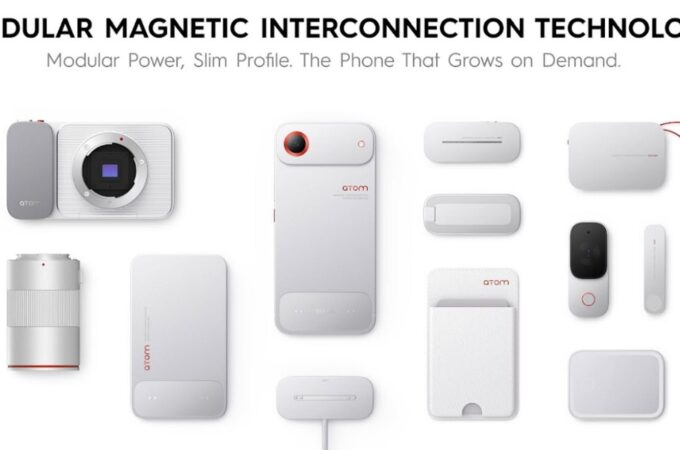
TECNO is preparing a bold showcase at MWC 2026: the world’s thinnest modular smartphone ecosystem, built around a magnetic interconnection system that instantly brings to mind the Motorola Moto Z and its snap-on modules from a decade ago. This time, TECNO is aiming higher, with support for around ten attachable modules designed for productivity, imaging, gaming and battery expansion.
At the core of the platform lies a remarkably slim 4.9 mm smartphone engineered to maintain the footprint of a regular device even when modules are attached. The accessory lineup includes a 4.5 mm ultra-thin external battery, a standalone action camera module and a dedicated telephoto unit functioning as an independent optical system with live preview streamed directly to the phone’s display.
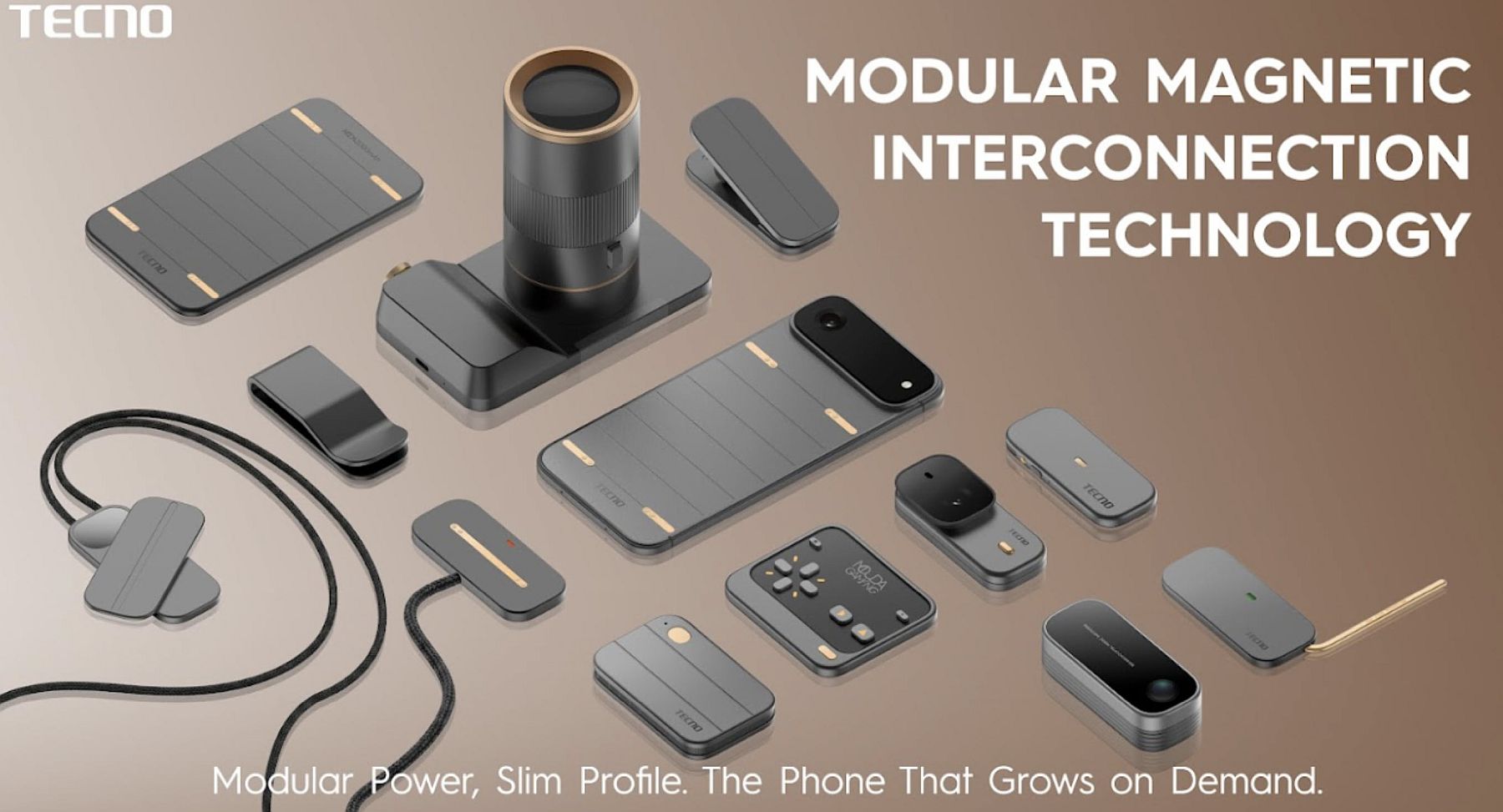
TECNO will present the concept in two distinct design editions. The ATOM Edition opts for a clean, structured aesthetic with a silver aluminum frame and subtle red accents, while the MODA Edition takes a more expressive, geek-inspired approach, emphasizing the device’s modular identity. Both variants are crafted to highlight customization and user choice.
The modular ecosystem spans roughly ten modules targeting varied use cases such as pro photography, off-grid communication, extended autonomy, enhanced gaming performance or environmental data capture. Attachments lock into place via a precision magnetic matrix, while power and data are exchanged through low-heat pogo-pin connectors.
The phone itself is built around anti-glare glass and a polished metal chassis. Its back is divided into eight modular zones that act as guiding rails and contact points for accessories. TECNO says the architecture allows smart connectivity switching, automatically shifting between Wi-Fi, Bluetooth and mmWave depending on the active module.
The company frames this project as a platform-first initiative, designed for long-term expansion. Future modules may include AI processing units, lifestyle-oriented accessories or additional storage solutions. The underlying idea is pushing smartphone evolution toward adaptable hardware, letting users shape their device configuration according to the moment, rather than being locked into fixed specifications at purchase.
Source: Gizmochina

Recent comments