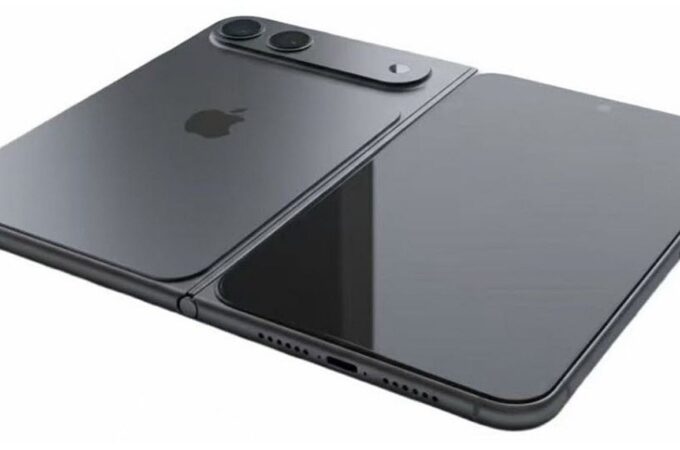
The first CAD-based renders of the iPhone Fold don’t just confirm that Apple is finally stepping into the foldable space — they reveal a device that seems deliberately engineered to break expectations around what a foldable iPhone should look like.
Thise form factor feels different from the Galaxy Z Fold or Pixel Fold. However a clear design philosophy begins to emerge: this is less a folding phone and more a compact, landscape-first iPad that happens to close.
The inner display measures 7.76 inches, with a resolution of 2713 × 1920. That’s not a square, not even close — and that’s the point. When unfolded, the iPhone Fold lands directly in landscape orientation, suggesting Apple is intentionally aligning the device with existing iPad app layouts rather than forcing developers to rethink UI paradigms.

From an industrial design perspective, this is a classic Apple move: bend the hardware so the software ecosystem doesn’t have to. If these proportions are accurate, many iPad apps could theoretically run day one without modification, simply scaled down. It’s a pragmatic, ecosystem-first decision disguised as an aesthetic one.
Folded, the device measures 120.6 × 83.8 × 9.6 mm. Unfolded, it stretches to 120.6 × 167.6 × 4.8 mm. The height remains constant, reinforcing the idea that this is not a “tall phone that unfolds,” but rather a wide slab that doubles its working surface.

The cover display is where things get truly strange — in a good way. At 5.49 inches with a resolution of 1422 × 2088, it sports a tall, narrow aspect ratio that feels more like a remote control screen than a traditional smartphone display. This suggests Apple sees the outer screen as a utility interface: notifications, quick replies, calls, maybe light navigation — not prolonged content consumption.
On the rear, the dual-camera setup sits inside an oval, horizontal camera bar, visually reminiscent of the rumored iPhone Air design language. It’s restrained, almost understated, and far less aggressive than the multi-lens islands dominating current foldables. From a balance and ergonomics standpoint, this flatter camera layout makes sense for a device meant to rest open on desks in landscape mode.

Selfie cameras are split by context: an under-display camera embedded into the inner folding screen and a hole-punch on the cover display. It’s a compromise, but a logical one — preserving immersion inside while keeping reliability outside.
Taken as a whole, these CADs don’t scream “first-generation experiment.” They read more like a product that’s been iterated quietly for years, tuned around software continuity, ergonomics, and proportion control rather than novelty.
If the iPhone Fold does arrive — whether teased in September or delayed until early 2027, as rumors suggest — it won’t be trying to win the foldable race on spectacle. It seems designed to do something far more Apple-like: redefine the category by pretending it was obvious all along.
via iphone-ticker.de

Recent comments